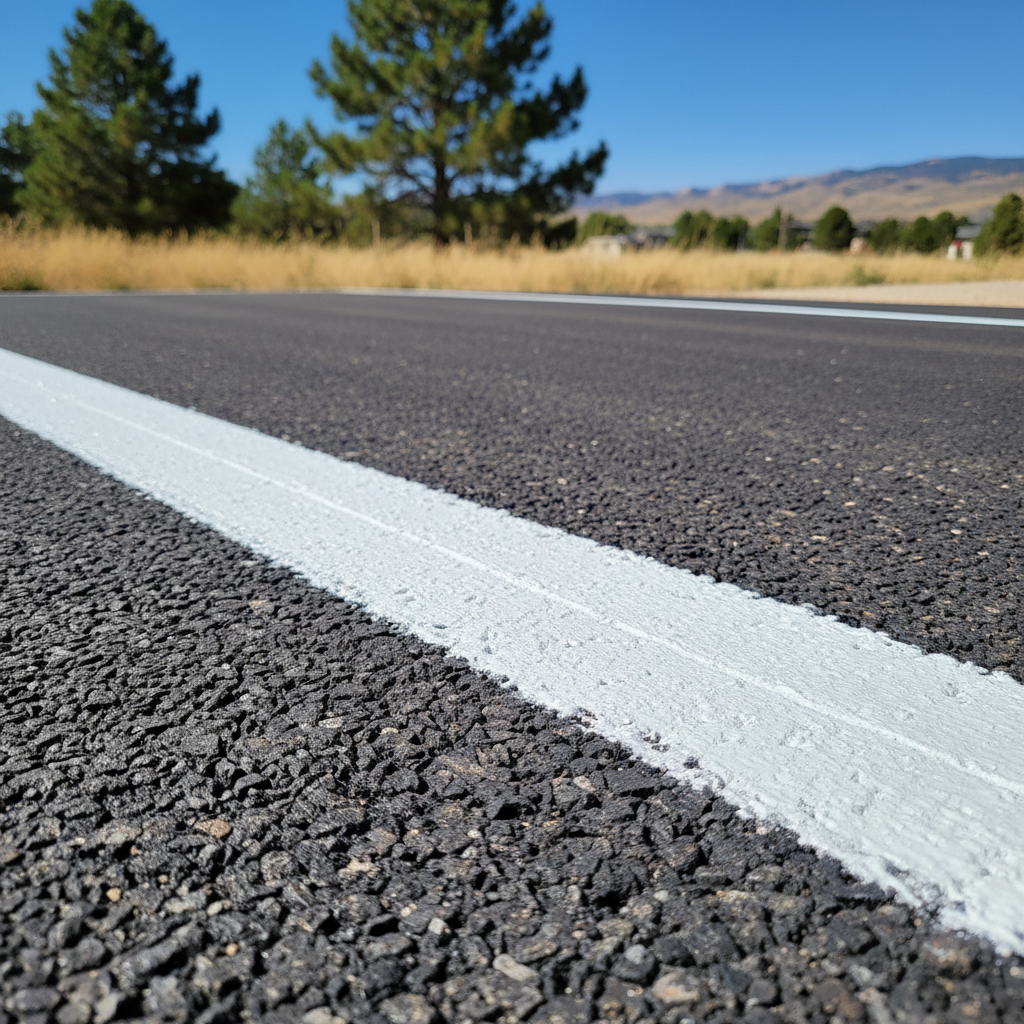
Alright, let's talk about striping your asphalt. Maybe you've got a basketball court in the backyard, or a shared driveway with a neighbor, or even just want to mark out parking spots for your home business. It's a common thought: "Can I just do this myself?" The short answer is, yeah, sometimes you can. But there's a big difference between a quick, temporary job and something that looks professional and lasts.
Before You Even Think About Painting
First off, you gotta assess your asphalt. Is it in good shape? I'm talking about a relatively smooth, clean surface. If your driveway's got cracks, potholes, or it's crumbling, striping it is like putting lipstick on a pig. You're not going to get a good, lasting result. You need to get those repairs done first. Also, make sure it's clean. Sweep it, blow it off, maybe even power wash it if it's really dirty, but let it dry completely before you do anything else. Any loose debris or dirt will mess with the paint adhesion.
Next, think about what you're actually trying to stripe. Is it just a simple straight line? Or are you trying to mark out specific parking stalls, an accessible parking spot, or a game court? The complexity of the design is a huge factor in whether DIY is a good idea. For a simple line, you might be okay. For anything more intricate, you're going to need some specialized tools and a steady hand.
Finally, consider the paint itself. You can't just grab any old house paint. You need a specific asphalt traffic paint. It's designed to withstand vehicle traffic, UV rays, and the freeze-thaw cycles we get here in Aurora. You can find aerosol cans or larger buckets for roller or spray machine application. Make sure it's a durable, exterior-grade paint meant for asphalt. Don't skimp on this; cheap paint will chip and fade fast, making all your hard work pointless.
The DIY Striping Process: What's Involved
Okay, so you've decided to tackle a simple project yourself. Here's what you'll generally need:
- Measuring tape and chalk line: For laying out your lines accurately.
- Painter's tape or stencils: To create crisp edges, especially if you're using a roller or brush.
- Traffic paint: As I mentioned, the right stuff.
- Paint roller with an extension handle, or an aerosol paint applicator wand: Makes it easier to apply uniformly.
- Safety gear: Gloves, old clothes, maybe even a mask if you're sensitive to fumes.
Start by cleaning the surface thoroughly. Then, measure and mark out your lines. This is where patience pays off. Use a chalk line for long, straight runs. For curves or specific symbols, stencils are your friend. Once your lines are marked, you can either tape off the edges if you're rolling, or just follow your chalk line carefully if you're using an aerosol can with a wand.
Apply the paint in thin, even coats. Two thin coats are always better than one thick, gloppy one that'll take forever to dry and might peel. Let each coat dry according to the manufacturer's instructions before applying the next. This is especially important in our dry Colorado climate; things might seem dry on the surface but still be tacky underneath.
Peel off any painter's tape while the paint is still slightly wet to prevent it from pulling up dried paint edges. Then, let the whole thing cure. This means staying off it for at least 24-48 hours, or whatever the paint manufacturer recommends. Don't rush this part, or you'll have tire marks all over your fresh stripes.
When to Call a Professional (Like Aurora Asphalt & Paving)
Look, for a simple, straight line or two on a small, perfectly flat surface, DIY can work. But for anything more involved, or if you want a truly professional, long-lasting result, you really should call in the pros. Here's why:
- Precision and Uniformity: We've got specialized striping machines that lay down perfectly straight, consistent lines. Trying to get that with a roller and tape on a long driveway is incredibly difficult. Plus, if you're marking out parking stalls, they need to be uniform in width and spacing.
- Durability: Professional-grade traffic paint is often higher quality and applied with equipment that ensures optimal adhesion and thickness. It's designed to stand up to the heavy traffic and harsh weather conditions we see, from the intense summer sun to the winter snow and ice that can really beat up asphalt, especially in areas like the older parts of Aurora with mature trees and varied soil conditions.
- Efficiency: We can stripe a large area much faster than you ever could by hand. Time is money, right?
- Complex Layouts: Need handicap symbols, directional arrows, or specific numbering? That requires stencils, specialized equipment, and expertise to get right. Messing up a handicap spot could even lead to fines.
- Cost-Effectiveness in the Long Run: While the initial DIY cost might seem lower, if your lines fade quickly, chip, or look sloppy, you'll end up redoing it sooner. A professional job lasts longer and looks better, saving you time and money in the long run.
So, if you're just marking a quick boundary, go for it. But if you're looking for a sharp, durable, and compliant striping job for your home or business, give Aurora Asphalt & Paving a call. We'll get it done right, the first time.