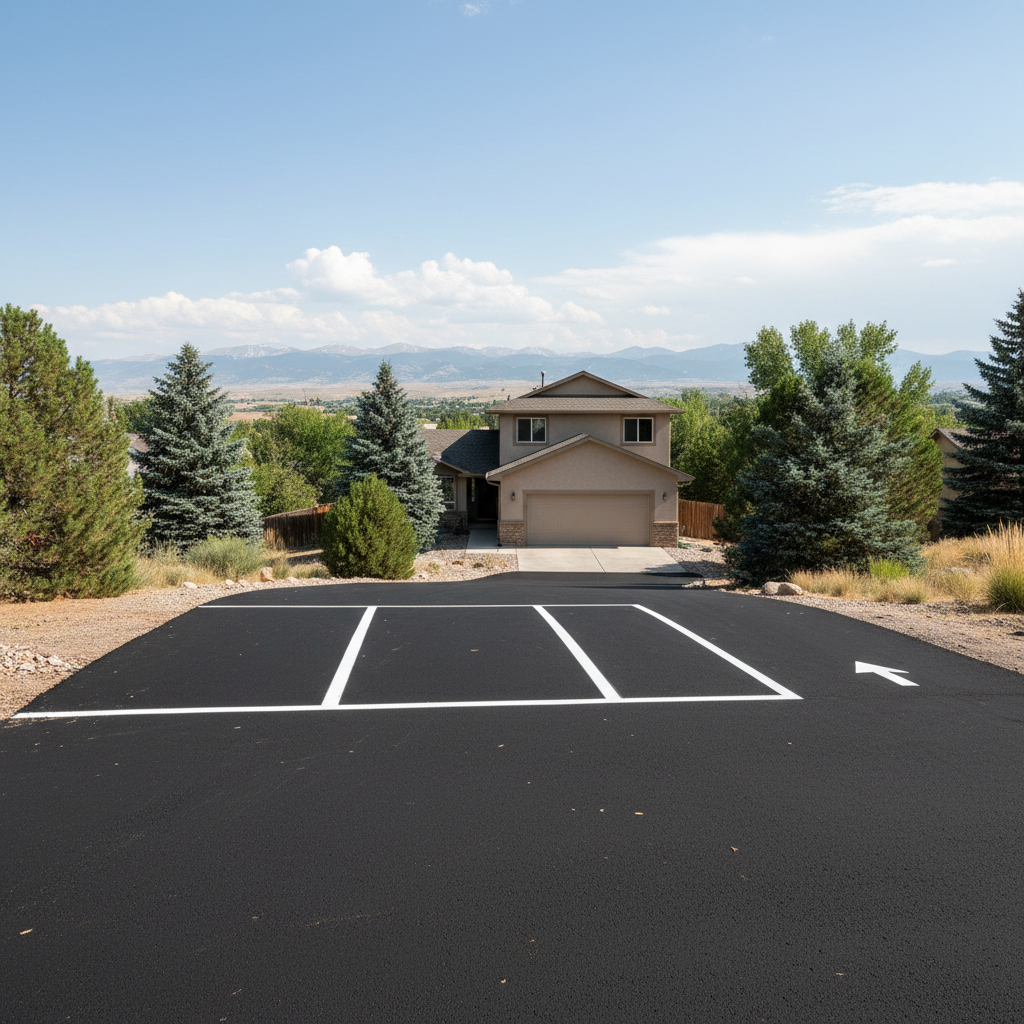
Alright, let's talk about asphalt striping costs here in Aurora. You've got a parking lot, maybe a new one, or your old lines are faded, and you need to get them painted. The first question everyone asks is, "How much is this going to cost me?" It's not as simple as a flat rate per foot, but I can definitely give you a solid idea of what to expect and what factors play into the final price.
What Drives Striping Costs?
A few key things really push the price up or down. Understanding these will help you make sense of any quote you get.
- Size and Layout: This is probably the biggest one. A small, rectangular lot with just a few parking stalls is going to be way cheaper than a sprawling, complex layout with multiple entrances, fire lanes, and directional arrows. More square footage and more intricate markings mean more time and more paint.
- Condition of the Existing Pavement: Is it a fresh, smooth, dark asphalt surface? That's ideal. Is it old, cracked, and faded with ghost lines everywhere? That takes more prep work, sometimes even grinding down old paint, which adds to the labor. If your lot is full of potholes, we'll need to address those first, and that's a whole different job.
- Type of Paint: There are different grades of traffic paint. Standard acrylic water-based paint is common and generally the most affordable. Then you've got solvent-based, thermoplastic, or epoxy paints, which are more durable and last longer, especially in our harsh Colorado sun and freeze-thaw cycles, but they cost more per gallon and are harder to apply.
- Number and Type of Markings: Basic parking stalls are one thing. But if you need ADA-compliant handicap symbols, crosswalks, fire lanes, loading zones, stenciled numbers or letters, speed bumps marked, or curb painting, each of those adds complexity and time. Handicap stalls, for example, require specific dimensions and often a blue background, which is extra paint and labor.
- Site Preparation: If we have to sweep the lot, power wash it, or even fill cracks before we start striping, that's going to be factored into the cost. A clean, smooth surface is essential for good adhesion and a crisp line.
- Mobilization: Just getting the crew and equipment to your site costs money. This is usually a fixed fee that covers travel time, fuel, and setting up.
Typical Cost Ranges in Aurora
Alright, let's get to some numbers. Keep in mind these are averages, and your specific project might fall outside these ranges depending on the factors above. I'm talking about commercial lots here, not just a residential driveway.
- Small Parking Lots (10-20 spaces): For a basic refresh with standard white or yellow lines, you might be looking at anywhere from $500 to $1,200. This usually includes basic stalls, maybe a few arrows, and a handicap symbol or two.
- Medium Parking Lots (50-100 spaces): For a commercial property like a small strip mall or an office building, expect to pay between $1,500 and $4,000. This would cover more extensive striping, including fire lanes, crosswalks, and multiple handicap spaces.
- Large Parking Lots (100+ spaces, or complex layouts): For big box stores, large apartment complexes, or industrial parks, costs can easily range from $4,000 to $10,000+. These projects often involve more complex designs, multiple phases, and specialized markings.
- Per Linear Foot: If you're just looking for a general idea, basic line striping (4-inch wide lines) can run anywhere from $0.25 to $0.75 per linear foot. Stenciled symbols (like handicap, arrows, or 'STOP') usually cost $50 to $150 each, depending on size and detail. Curb painting might be $1.50 to $3.00 per linear foot.
Remember, these are just guidelines. A lot in, say, the Green Valley Ranch area with its newer, well-maintained asphalt might be on the lower end, while an older lot near the Anschutz Medical Campus that hasn't been touched in years could be on the higher side due to the extra prep needed.
What Should Be in Your Quote?
When you get a quote from Aurora Asphalt & Paving, or any reputable contractor, it should be clear and detailed. Here's what you want to see:
- Scope of Work: A clear description of what's being striped – number of parking stalls, arrows, handicap symbols, fire lanes, etc.
- Materials: What type of paint will be used (e.g., water-based acrylic traffic paint).
- Preparation: Any cleaning, sweeping, or old paint removal included.
- Timeline: Estimated start and completion dates.
- Cost Breakdown: Itemized costs for different services or a clear lump sum.
- Warranty: What kind of guarantee do they offer on their work?
- Insurance and Licensing: Confirmation they're properly insured and licensed.
How to Avoid Overpaying
Nobody wants to get ripped off. Here's my advice:
- Get Multiple Quotes: Always get at least three detailed quotes. This helps you compare apples to apples and understand the going rate.
- Ask for References: A good contractor will happily provide them. Check out their previous work if you can.
- Be Specific: Know exactly what you want. Provide a clear diagram or walk the lot with the contractor to point out every detail. Ambiguity leads to change orders and higher costs.
- Understand the Paint: Don't just go for the cheapest option. A slightly more expensive, durable paint might save you money in the long run by not needing to be redone as often.
- Check for Hidden Fees: Make sure the quote includes everything – mobilization, paint, labor, cleanup. No surprises.
Striping is more than just making your lot look good; it's about safety and compliance. You want clear, visible lines that guide traffic and pedestrians safely. Doing it right the first time will save you headaches and money down the road.