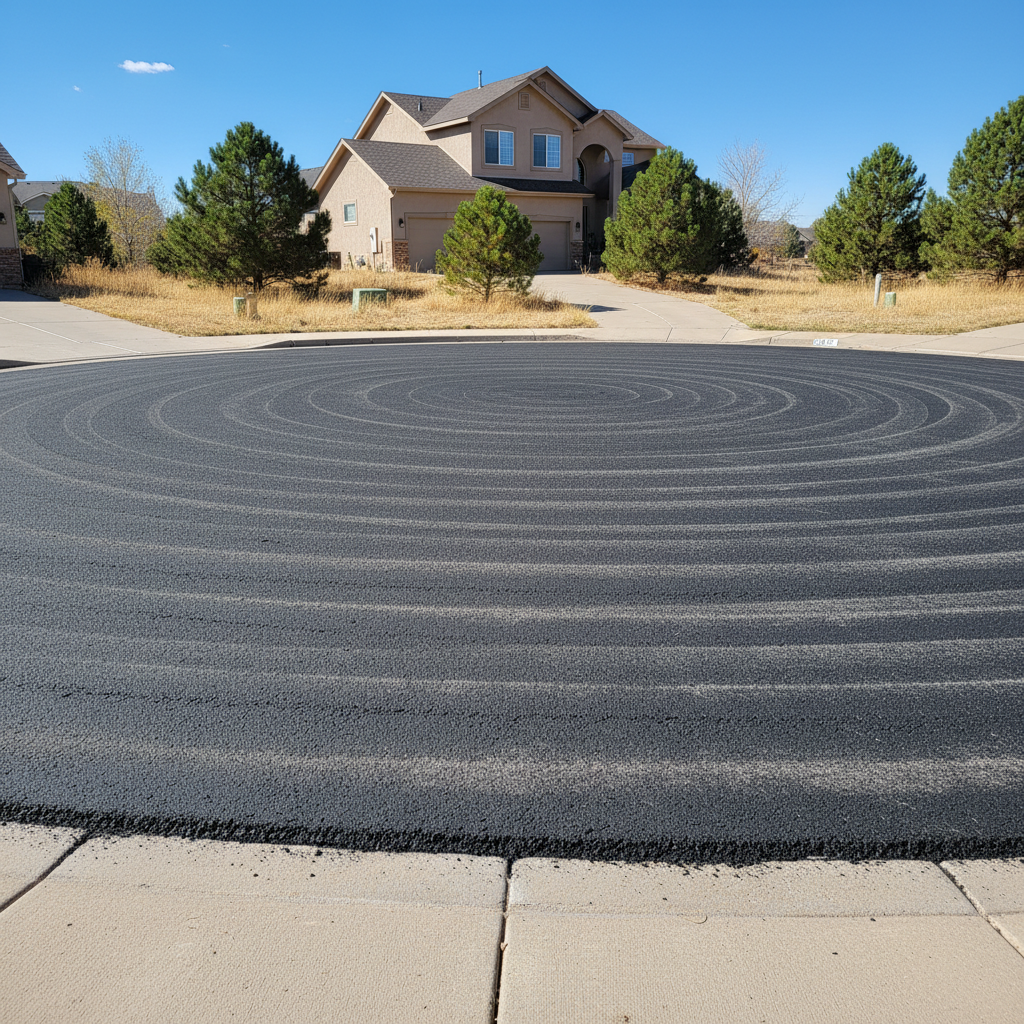
Alright, let's talk about asphalt milling. If you're looking at getting your parking lot or a section of road redone, you've probably heard the term, and now you're wondering what it's going to cost you. It's not as straightforward as buying a gallon of milk, but I can give you a pretty good roadmap of what to expect here in Aurora.
First off, what even is milling? Basically, it's like a giant planer for asphalt. We use specialized machines to grind off the top layer of your existing pavement. This isn't just for looks; it creates a fresh, even surface for new asphalt to bond to, without raising the overall height of your lot. It's often a much smarter, more cost-effective choice than a full tear-out and replacement, especially if the base layer is still solid.
What Drives the Cost of Asphalt Milling?
You want to know numbers, right? I get it. But before I throw out dollar signs, you need to understand what makes those numbers fluctuate. There are a few big factors:
- Project Size: This is probably the biggest one. The more square footage we're milling, the more machine time, fuel, and labor it takes. Larger projects usually get a better per-square-foot rate than smaller ones.
- Depth of Mill: Are we just shaving off an inch or two, or are we going down four inches to fix some serious issues? Deeper milling means more material to remove and more machine passes, which adds to the cost.
- Accessibility & Site Conditions: Is it a wide-open parking lot, or a tight space with lots of light poles, curbs, and drains to work around? Tricky areas take more time and precision. If the existing asphalt is severely deteriorated or has a lot of potholes, that can also slow things down.
- Hauling & Disposal: Once we mill that old asphalt, it's gotta go somewhere. The cost of hauling it away and disposing of it at a recycling facility is a significant part of the overall price. Luckily, asphalt is 100% recyclable, so it's not just going into a landfill.
- Traffic Control: For commercial jobs, especially on busy streets, we often need to set up cones, flaggers, and signage to keep everyone safe. That's an added expense you'll see in the quote.
Typical Cost Ranges for Asphalt Milling in Aurora
Okay, here's what you're probably looking for. For most commercial or larger residential milling projects in Aurora, you're usually looking at a range of $0.75 to $2.00 per square foot. This includes the milling itself, hauling, and disposal. Remember, this is just for the milling; it doesn't include the cost of new asphalt paving, which would be a separate line item.
Let's break that down a bit:
- Small jobs (under 5,000 sq ft): You might be closer to the higher end, say $1.50 - $2.00 per square foot, because the fixed costs of mobilizing equipment are spread over a smaller area.
- Medium jobs (5,000 - 20,000 sq ft): This is where you'll often see prices in the $1.00 - $1.50 per square foot range.
- Large jobs (over 20,000 sq ft): For big parking lots or extensive road sections, you could see prices drop to $0.75 - $1.00 per square foot.
For example, if you have a 10,000 square foot parking lot and we're doing a standard 2-inch mill, you might be looking at around $10,000 to $15,000 just for the milling portion. This is a good ballpark figure to start with.
What Should Be Included in Your Milling Quote?
When you get a quote from Aurora Asphalt & Paving, or any other contractor, make sure it's clear about what's covered. A good quote should itemize:
- Mobilization: Getting the equipment to and from your site.
- Milling: The actual grinding of the asphalt, specifying the depth.
- Sweeping/Cleanup: Clearing the milled surface of debris.
- Hauling & Disposal: Transporting the milled material off-site.
- Traffic Control: If required for safety.
What it generally won't include is the new asphalt paving, any necessary base repairs, or sealcoating, as those are separate services.
How to Avoid Overpaying for Milling in Aurora
Nobody wants to get ripped off, especially not here in Aurora where we've got everything from older, established neighborhoods like Hoffman Heights to newer developments that require different approaches to pavement. Here are my tips:
- Get Multiple Quotes: This is a no-brainer. Don't just go with the first guy. Get at least three detailed quotes from reputable local contractors.
- Compare Apples to Apples: Make sure each quote specifies the same milling depth, includes hauling, and addresses any traffic control needs. A cheaper quote might be missing something crucial.
- Ask About the Base: Sometimes, what looks like a surface problem is actually a base issue. Milling won't fix a weak base. A good contractor will inspect your sub-base and let you know if you need additional repairs. If they don't mention it, ask.
- Check References & Reviews: A contractor's reputation speaks volumes. Look for local reviews and ask for references from past milling jobs.
- Understand the Scope: Be clear about what you want done. If you change your mind mid-project, it's going to cost you extra.
Milling is a critical step in getting a long-lasting, smooth new pavement surface. Done right, it saves you money in the long run by avoiding more extensive repairs down the road. Don't just focus on the lowest price; focus on the best value and a contractor who knows what they're doing.